Ranking the Prospects the Cardinals Acquired this Offseason
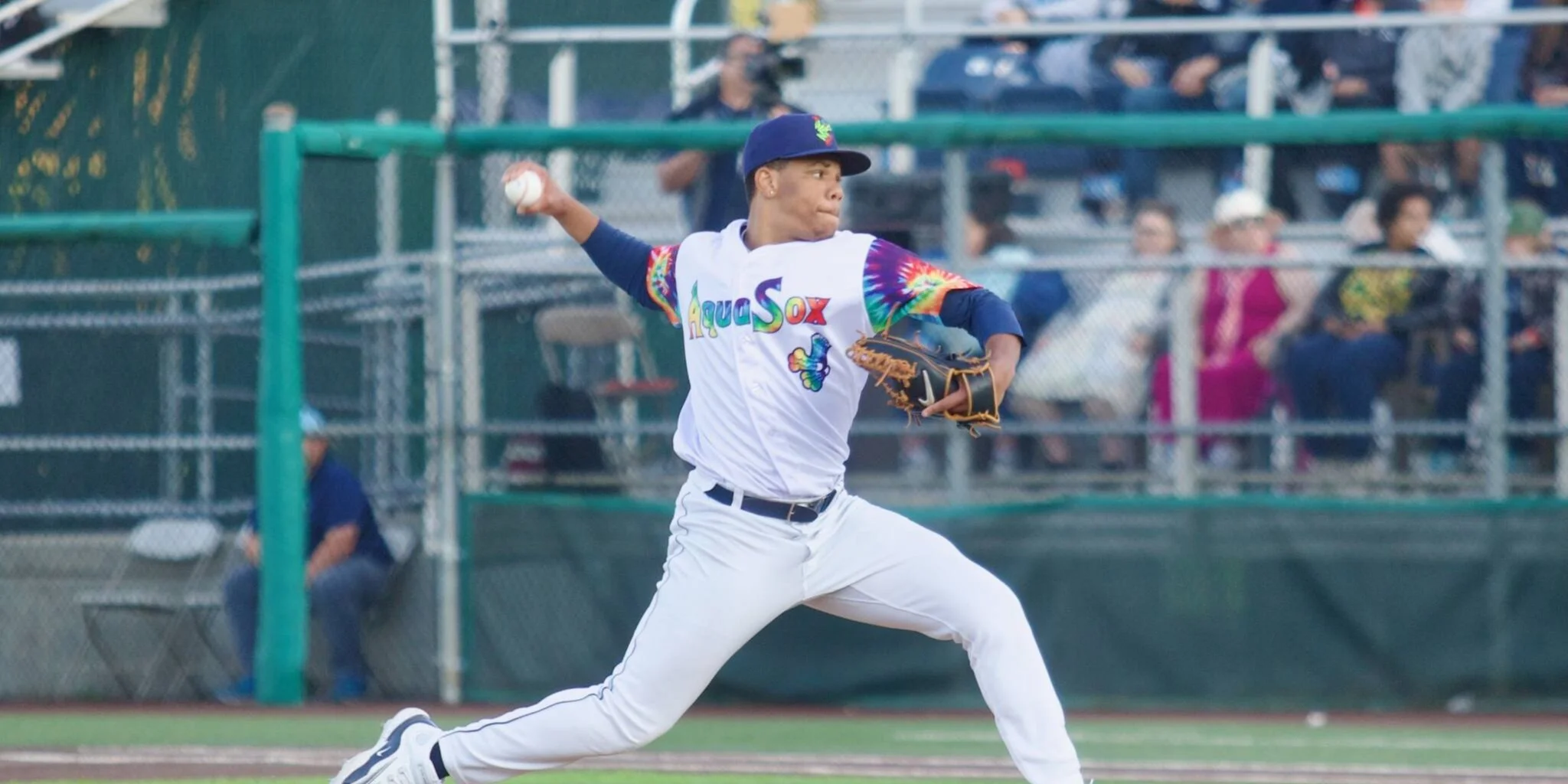
Credit: Everett Herald
With the Cardinals’ trade of Brendan Donovan, they have likely finished what has been a busy offseason for the team. The Cardinals acquired eight notable prospects through trades and the Rule 5 draft this offseason, a total that will expand to ten once the Cardinals select two more players during this year’s draft with the Compensation-B picks they acquired as part of the Donovan trade. The new direction of the Cardinals has been set, and it is off to a good start, as the Cardinals are ranked highly on most prospect lists, largely in part due to this haul of prospects from the offseason.
#8 - RHP Jack Martinez (Arenado Trade)
Acquired in the Nolan Arenado trade, Martinez has yet to pitch in the minors after being drafted by the Diamondbacks in the eighth round this past July out of Arizona State University. During his senior year at ASU, Martinez posted a 5.47 ERA in 77.1 innings with 110 strikeouts, good for a 32.3% strikeout rate, a 9.1% walk rate, and a .221 batting average against.
Martinez features a three-pitch mix, including a fastball that sits in the mid-90s and a changeup, which is his bread-and-butter pitch, sitting in the low 80s with a 45.3% whiff rate and a 39.7% chase rate. He also throws a mid-80s slider. Martinez has an odd step-out delivery that almost makes him look like he is falling, which causes him to have a higher arm angle and helps the changeup play up.
#7 - RHP Matt Pushard (Rule 5 Draft)
Pushard was selected by the Cardinals in the MLB portion of the Rule 5 draft, and the 28-year-old has a complete arsenal against right-handed hitters, which should give him a good chance at sticking on the major league roster for the entire season. Last season at Triple-A Jacksonville, Pushard posted a 3.61 ERA in 62.1 innings with a 28.5% strikeout rate and a 9.1% walk rate.
Pushard features a really good fastball that sits in the 95+ mph range with good movement, allowing the pitch to generate plus whiff rates. His curveball and slider give him a duo of plus breaking pitches with good velocity, and both have whiff rates over 28%. Pushard also had strong quality-of-contact numbers, allowing just a 31.8% hard-hit rate and a 4.5% barrel rate, both of which are above average. The main concern with Pushard is how he will attack left-handed hitters, but the Cardinals have been excellent at developing changeups in recent years. Giving him more confidence in an arm-side pitch would be huge for his viability in the bullpen.
#6 - OF Colton Ledbetter (Donovan Trade)
The third prospect in the Donovan trade, Ledbetter shouldn’t be overlooked, as he is a toolsy athlete with power — a dynamic skillset with the potential to make him a major leaguer. Ledbetter is already 24 years old and reached Double-A in the Rays system before the trade. He has posted a 112 or better wRC+ at every level of the minors so far.
Last year at Double-A Montgomery, Ledbetter posted a .715 OPS with seven home runs in what is a very difficult offensive environment in the Southern League. He has consistently posted plus exit velocities throughout his minor league career, reaching 114 mph this past season with a 447-foot blast. While the power didn’t fully show up in 2025, he did hit 16 home runs at Bowling Green in 2024, showing the pop is still present. His speed is unquestioned, as he has stolen 37 and 34 bases over the past two seasons.
Defensively, his outfield profile is a bit more suspect. Depending on the evaluator, some believe he has a chance to stick in center field and even be a plus defender, while others think he will end up in a corner due to poorer reads off the bat. The big question with Ledbetter is whether he will make enough contact to succeed. He posted a 74.2% contact rate this past season, up from 70% in 2024. He has also become more selective at the plate, with his walk rate rising from 8.5% to 9.1% between the 2024 and 2025 seasons. Finding the right balance will be key for his future success in 2026 and beyond.
#5 - RHP Blake Aita (Contreras Trade)
Blake Aita is a fun pitcher with plenty of projection, which could allow him to climb top-30 lists in the coming year if everything comes together. This past season, split between Low-A and High-A, Aita posted a 3.98 ERA in 115.1 innings with 99 strikeouts and a 1.05 WHIP. He also held opponents to a .212 batting average.
A 6’4”, 215-pound right-hander, Aita saw his fastball tick up in velocity from his college days, comfortably sitting in the 93-94 mph range during his first season in the Boston system. He could see another jump after moving to the Cardinals organization. The sweeper is clearly his best pitch, sitting in the low 80s with upwards of 3,200 RPMs of spin and generating well above-average whiff rates. Aita also mixes in a solid curveball and a changeup that still needs improvement.
One notable offseason anecdote, as reported by the St. Louis Dispatch, is that Aita is working on a splitter, which could open up his arsenal against left-handed hitters — an area he needs to improve. Aita has plus command, walking only 6.5% of batters this past season, and that projects to be one of his strongest traits moving forward.
#4 - OF Tai Peete (Donovan Trade)
You don’t have to dig too deep to see why the Cardinals valued a player like Peete in the Donovan trade. Peete is an excellent athlete with four above-average tools: power, speed, arm strength, and fielding ability. The main area of concern is his bat-to-ball skills, as he struck out over 30% of the time this past season at High-A despite being just 19 years old.
Even with the swing-and-miss issues keeping his average in the low .200s, Peete put together a 19-homer, 25-stolen-base season to go along with 24 doubles and four triples. His .187 ISO at High-A ranked eighth among all qualified Mariners prospects, ahead of names like Colt Emerson, Harry Ford, and Michael Arroyo.
If the Cardinals can help Peete cut down on his strikeouts — even by 5% — and improve his contact rates, he could make a Joshua Baez–type jump in the coming years. Peete was challenged aggressively in the Mariners system, playing pro ball at 17 and reaching High-A at 19, where he was three years younger than the average player. I wouldn’t be surprised if the Cardinals reassign Peete to High-A this season and see much better results.
Outside of the swing-and-miss concerns, there’s a lot to like. Peete plays an above-average center field with plus speed, stealing 70 bases over the past two seasons, and his strong arm led to seven outfield assists in 2025. I’m really excited to see how his 2026 season unfolds.
#3 - RHP Yhoiker Fajardo (Contreras Trade)
Fajardo does so many things well for a 19-year-old pitcher that it’s honestly impressive. Between the complex league and Low-A this past season, he posted a stellar 2.25 ERA in 72 innings with 83 strikeouts and a 1.10 WHIP.
What stood out most when researching Fajardo was how well he used his two breaking pitches at just 18 years old. He features a low-to-mid-80s slider that generates swing-and-miss and is especially effective against right-handed hitters, who hit just .193 against him. He also has a solid changeup in the upper 80s (a kick-change) that helped him limit left-handed hitters to a .217 average.
While his fastball doesn’t have elite movement, it sits in the 93-95 mph range and can touch the upper 90s. With added projection on his 6’3”, 181-pound frame, he could sit in the upper 90s more consistently in the coming years. His command also impressed; while a 9.4% walk rate isn’t great on the surface, it’s more understandable given his age, and there’s plenty of room for improvement as he matures.
Fajardo has all the makings of a solid pitcher, and it will be interesting to see whether he opens the season in Peoria or Palm Beach.
#2 - LHP Brandon Clarke (Gray Trade)
If you ask around the Cardinals prospect space about who has the highest upside, many would point to Brandon Clark, and for good reason. He features one of the most dynamic arsenals in the minor leagues. His fastball sits in the 96-98 mph range and, while it doesn’t have elite movement, his 7+ feet of extension help make up for it.
Clarke’s standout pitch is his slider, a legitimate 70-grade offering and likely the best non-fastball pitch in the Cardinals system. It averages 86-88 mph with 8-10 inches of sweep and generates an absurd amount of swing and miss. He also mixes in a larger low-80s sweeper and a curveball.
Nobody could touch Clarke in 2025, as he held opponents to a .128 batting average against, including sub-.100 marks against left-handed hitters. So why isn’t he ranked number one? Clarke battled both injuries and command issues, limiting him to just 38 innings with 60 strikeouts but 27 walks. That 15.5% walk rate is a bit deceiving, as he dealt with blisters that sidelined him for most of June. After returning, his walk rate spiked to 23.7%, up from 9.3% pre-blisters.
Clarke underwent surgery this offseason to improve blood circulation to his fingers, which the Cardinals hope will resolve the blister issues and allow him to take a major step forward in 2026 — potentially pushing him into top-100 prospect territory.
#1 - SWP Jurrangelo Cijntje (Donovan Trade)
Cijntje was the lone top-100 prospect the Cardinals acquired in the Donovan trade, and for good reason. The switch-pitcher posted a 3.99 ERA in 108.1 innings with 120 strikeouts across High-A and Double-A.
Cijntje is primarily a right-handed pitcher, which makes sense given his arsenal. From the right side, he features a fastball that sits in the 95-97 mph range and can touch 99 with plus movement. He pairs it with a plus mid-80s slider that serves as his primary offspeed pitch. He also mixes in a slow curveball and a hard upper-80s changeup, though both currently profile as fringe-average offerings.
From the left side, Cijntje throws a low-90s fastball and a low-80s sweeper, but his command is poor, with a well-above-average walk rate. From the right side, however, he shows above-average command. It wouldn’t be surprising if the Cardinals stick primarily to his right arm for now, while still allowing him to work left-handed in bullpens and non-game settings.
Cijntje will need to figure out how to better combat left-handed hitters, who hit .252 with an .845 OPS against his right arm in 2025. That said, joining the Cardinals under new pitching director Matt Pierpont — who worked with Cijntje in Seattle — could aid his development in an organization known for producing quality changeups.
Cijntje has shown the durability and talent to be a solid pitcher and could climb the ladder quickly once he focuses exclusively on his right arm. Expect him to open the 2026 season in Springfield.