1 Underrated Prospect at Every Position in the St. Louis Cardinals Farm System
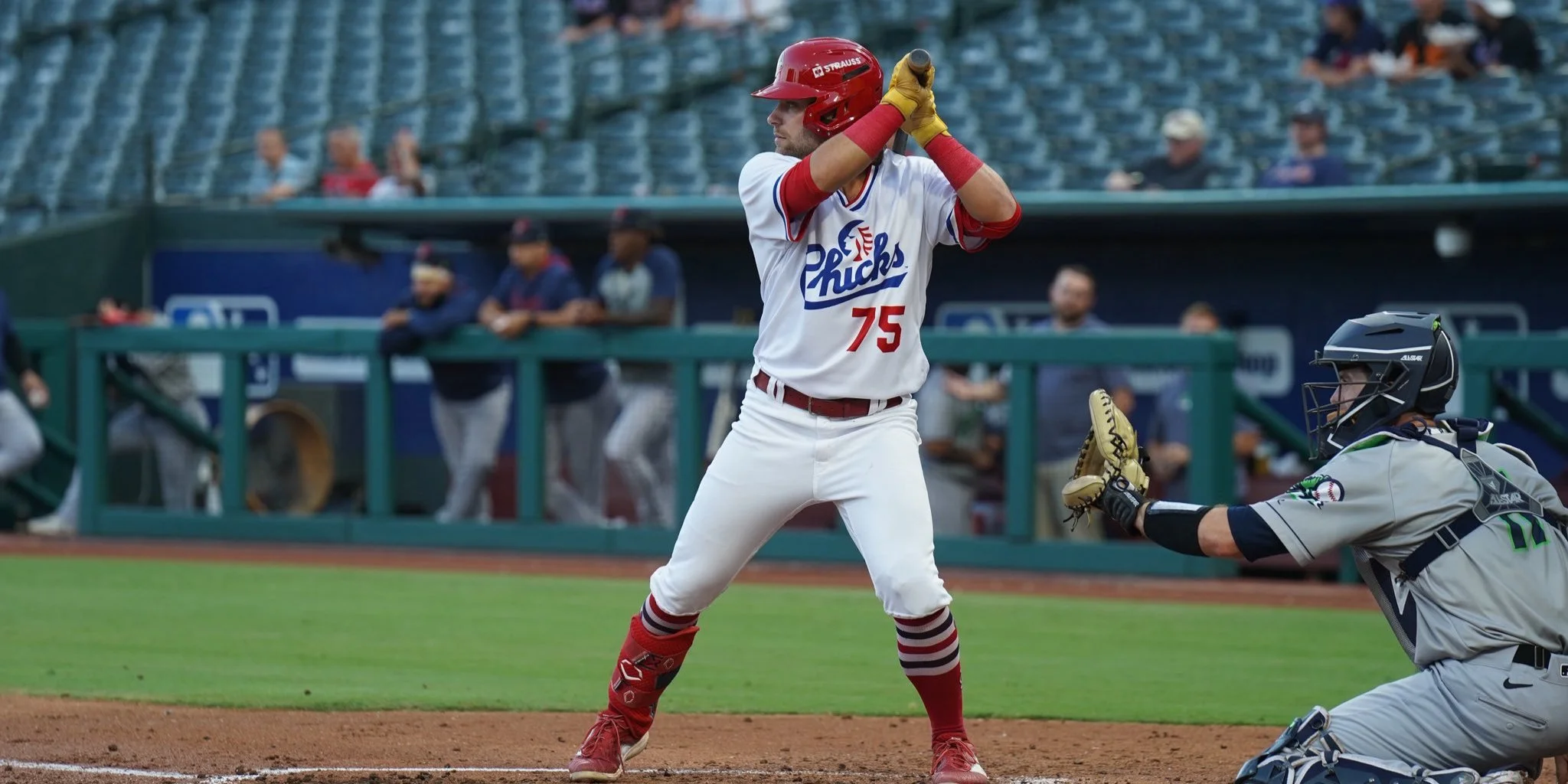
Credit: Memphis Redbirds
This is one of my favorite articles to write every year because it serves as one of my first previews for the upcoming 2026 season. I like to write this article before releasing my top 30 list because it highlights mostly players who are either not on the list or are on the cusp of being a top 30 prospect. That being said, the improvement of the system over the past year has pushed some players who had impressive seasons out of the spotlight, and this article will hopefully shine a light on some players who went under the radar in 2025 that you should watch in 2026.
C – Juan Rujano (DSL)
With catchers being the strongest position in the Cardinals' system, it isn’t a surprise that a catcher down at the DSL would be overshadowed by the likes of Rainiel Rodriguez, Leonardo Bernal, and Jimmy Crooks, but the 17-year-old Rujano had a very impressive first season of pro ball. He slashed .279/.405/.418 for a .823 OPS, which came out to a 121 wRC+. Rujano also balanced strikeouts and walks better than expected, with a 23% K rate to an impressive 12.8% BB rate, though whiffs are still a bit of a concern. According to Baseball America, Rujano stood out for consistently posting above-average exit velocities throughout the DSL season, which showed with 11 of his 34 hits going for extra bases, including three homers. Rujano was also great at driving in runs, recording 23 RBIs in 34 games. The biggest concern entering the DSL season, according to scouts, was Rujano’s defense, but he showed progress from his amateur days, posting only one passed ball in 112.2 innings behind the plate and throwing out an impressive 35.5% of runners. Rujano will likely come stateside in 2026 as part of what initially looks to be one of the stronger groups in recent years.
1B – Jack Gurevitch (A)
I’ll be honest: the Cardinals don’t have much when it comes to first base in the farm system, so this spot came down to Gurevitch or Blaze Jordan. I think Blaze Jordan is properly rated for his skill set, so I’ll go with Gurevitch. He was a bit overshadowed by all the exciting pitchers the Cardinals selected in the early rounds of the draft. Gurevitch is known for his power, hitting 17 homers in his final season at San Diego. While he struggled mightily in his adaptation to pro ball in his first 22 games, he still posted above-average max EV, 50th EV, and 90th EV, along with an impressive 13.1% walk rate, which ranked in the 63rd percentile. I don’t blame you if you’re concerned about Gurevitch’s slow start, but seeing how he adjusts over a full season next year will be key in evaluating where he stands as a prospect. He’ll need to make more contact and limit the strikeouts over a larger sample size to find success in minor league baseball.
2B – Noah Mendlinger (AA, AAA)
If you asked me who has consistently been the most underappreciated prospect in the Cardinals system, I’d likely go with Noah Mendlinger. He has been one of the most consistent contact hitters in the system for quite some time, and his 2025 season may have been his most impressive yet. He posted a .282 average with a .399 OBP and a .355 SLG for a 116 wRC+ across the two highest levels of the minors, including a 127 wRC+ at Triple-A. Mendlinger has always been known for making a ton of contact and having good plate discipline, but he took it to another level in 2025, posting just a 9.1% strikeout rate against a 12.3% walk rate. At Triple-A specifically, Mendlinger recorded a zone-contact percentage of 96.64%, which ranked in the 96th percentile, along with a 97th-percentile whiff rate and a 93rd-percentile chase rate. He did this while continuing to provide defensive versatility, logging time at both corner outfield spots as well as second and third base. If Mendlinger keeps this up at Triple-A next season, he could make his MLB debut as a utility man off the bench and may turn into a Dollar General version of Brendan Donovan (don’t take that literally) if he continues to make contact this consistently, even with underwhelming exit velocities.
SS – Miguel Hernandez (DSL)
I could have easily gone with Sebastian Dos Santos for this spot, as he posted the best wRC+ in the system this year at 158, but I’ve already written about him and he has received some recognition for his excellent season. For this article, I’m going with Miguel Hernandez, the DSL team’s shortstop, who posted an impressive .281/.404/.444 slash line en route to a 124 wRC+. Coming out of signing day, Hernandez was known as a glove-first prospect, but he really impressed with the bat in his first full pro season, tying for the team lead with five homers while his .163 ISO ranked fourth on the team. He also posted a respectable 20.7% strikeout rate to a very impressive 14.8% walk rate. Similar to Rujano, Hernandez excelled with runners in scoring position, driving in 34 runs in 36 games while also stealing 15 bases. As mentioned earlier, Hernandez is already considered a plus defender at shortstop and should stick there long term. It’s an exciting profile and should be a fun one to watch stateside in 2026.
3B – Ramon Mendoza (AA)
The 25-year-old Mendoza broke out in 2025, posting a 136 wRC+ at Springfield while slashing .275/.390/.452 with 14 homers, a career high. His .177 ISO was also the best mark of his minor league career. Those 14 homers more than doubled his previous career high of six, set in 2023 at Peoria. While some of the offensive improvement can be attributed to Springfield’s favorable hitting environment, Mendoza also cut his strikeout rate from the low-to-mid 20s down to 19.8% while raising his walk rate to 14.9%. For the first time in his career, Mendoza played full time, appearing in 105 games for Springfield primarily at third base. Defensively, he showed himself to be one of the best infield defenders in the system, consistently making difficult plays look routine while flashing plenty of arm strength. He may share time with Blaze Jordan at third base in Memphis in 2026, but Mendoza can also fill in at first and second base when needed. I’m excited to see how his 2026 season unfolds.
OF – Kenly Hunter (DSL)
One of the top signings from the 2024 class, Hunter impressed in his first pro stint with his contact-oriented approach and speed serving as his main calling cards. He slashed .314/.442/.400 for a 131 wRC+ with 25 stolen bases, primarily hitting leadoff for the DSL team. Hunter also walked more than he struck out, posting a 24:20 BB/K ratio. He is considered an above-average defender with the speed and instincts to handle center field long term. Hunter doesn’t offer much power, posting just a .086 ISO with no homers, but he did record three triples, which ranked second on the team behind Sebastian Dos Santos, who had four. The Cardinals will have a fun group of 18-year-olds coming stateside in 2026, and Hunter is another strong example of that talent pool.
OF – Zach Levenson (A+, AA)
After a down 2024 season in which he posted below-average numbers across the board, 2025 was a significant bounce-back year for the 23-year-old. Levenson slashed .245/.367/.403 with 12 homers and a .157 ISO. He got off to a slow start in 2025 but turned things around in May and beyond, earning a promotion to Springfield in August. From there, he took off, posting a 128 wRC+ at Double-A over a 26-game sample, finishing the year with a combined 121 wRC+ across two levels. If Levenson gets off to another strong start in 2026, he could return to top-30 prospect lists and emerge as one of the biggest risers in the system. He doesn’t receive much credit for his defense, but he’s solid to slightly above average in the corners and can handle center field at a slightly below-average level when needed. 2026 could be a big season for the power-hitting righty, who could establish himself alongside Joshua Baez as a future right-handed bat in the St. Louis lineup.
OF – Travis Honeyman (A, A+)
Many people have forgotten about Honeyman, which isn’t surprising considering the 2023 third-round pick has yet to advance past Peoria and has dealt with a long list of injuries throughout his minor league career. However, Honeyman put together a very impressive first mostly healthy season, posting the 11th-highest wRC+ among qualified position players at 130. Much of that value, similar to Hunter, came from his ability to get on base, as he recorded an impressive .411 OBP, which ranked fourth among full-season Cardinals minor leaguers. Honeyman didn’t show much power, posting just a .080 ISO with three homers, but his .287 average ranked eighth among all Cardinals minor leaguers. He also played above-average defense in center field, where he spent the majority of his time. The Cardinals sent him to the Arizona Fall League, where he struggled with strikeouts and on-base ability. However, he was injured for much of the AFL season and was clearly selling out for power, so I wouldn’t put much stock in those numbers.
SP – Cooper Hjerpe (AA, injured – TJ)
The injuries Hjerpe has accumulated throughout his minor league career have caused many people outside of inner prospect circles to give up on him as a future piece. However, anyone who closely studies Hjerpe will rave about his potential to be a special, top-end pitcher when healthy. Across his minor league career, Hjerpe has posted a 3.38 ERA with 12.2 K/9 and 5.1 BB/9. He manages the walks well because he gives up very little hard contact, allowing roughly five hits per nine innings and consistently holding opponents to a batting average under .200. The funk in his delivery makes Hjerpe fun to watch but may also make him more injury-prone than the average pitcher, raising questions about durability. That said, he threw over 100 innings in his final season at Oregon State, so there is reason to believe he can handle the workload once healthy. Hjerpe won’t return until mid-2026 at the earliest, but when healthy, he’s a pitcher who can sit near the top of the organization alongside Doyle, Mathews, Clarke, and others.
RP – Michael Watson (A, A+, AA)
Michael Watson has been excellent since signing as an undrafted free agent in 2024, posting a 2.72 career ERA across two seasons with 100 strikeouts in 79.2 innings. Watson is a low-slot left-hander who has dominated hitters with his fastball, which plays extremely well at the top of the zone. He has held opponents to a batting average below .170 at both High-A and Double-A. His most dominant stretch came down the stretch with Springfield, where he posted a 1.11 ERA over 24.1 innings with 29 strikeouts, holding opponents to a .146 batting average and a 0.90 WHIP. Watson has been a great story as an undrafted signee who now looks well on his way to carving out a major league future. Don’t be surprised if he finds his way to St. Louis in 2026.