Breaking Down the Sonny Gray Trade
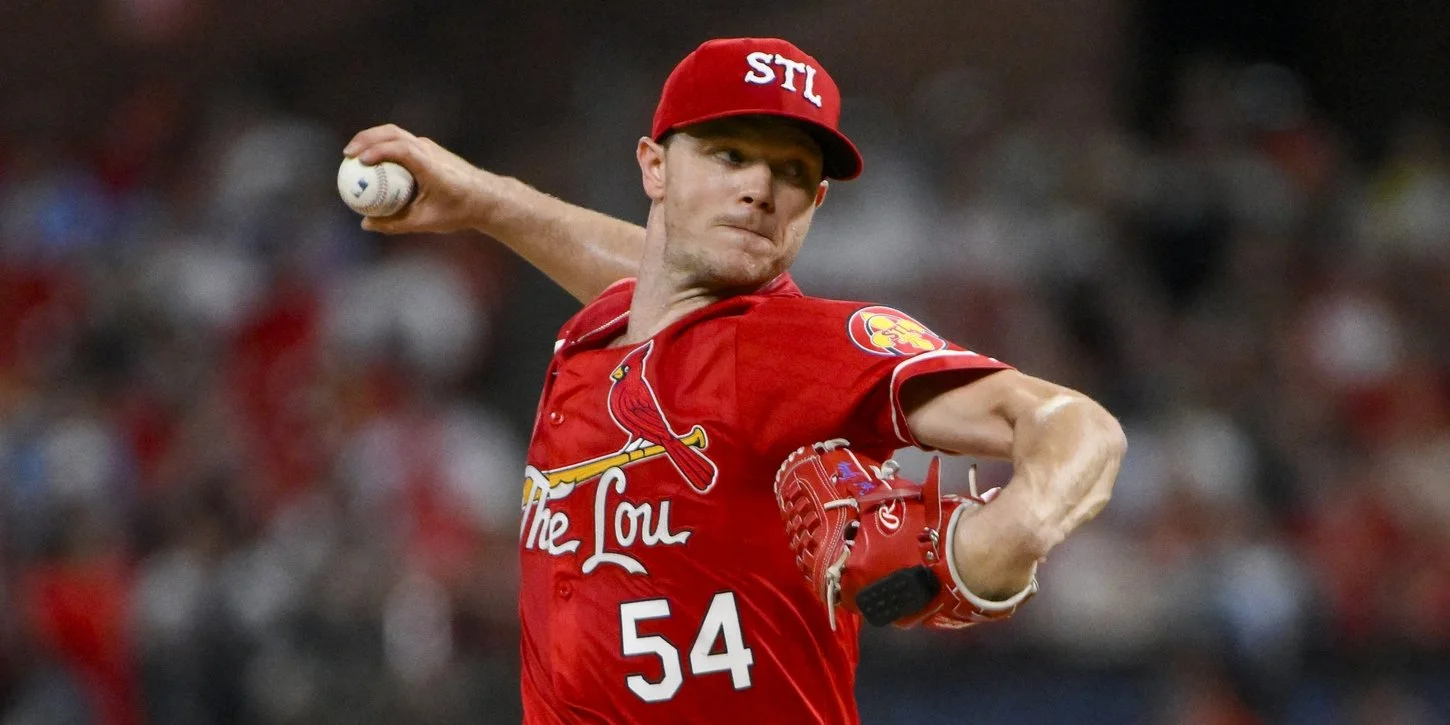
Credit: Jeff Curry-Imagn Images
Trade Details
As the 2025 season wound down, trade rumors swirled around the St. Louis Cardinals’ veteran core. Nolan Arenado and Brendan Donovan were the biggest names on the block, but the futures of Sonny Gray, Lars Nootbaar, and Willson Contreras remained far less certain. Gray and Contreras both held NTC (No-Trade Clauses) and people weren’t certain about which teams they would approve trades to.
On November 25th, just a couple days before Thanksgiving, new President of Baseball Operations Chaim Bloom made his first blockbuster move, shipping ace Sonny Gray and $20 million to the Boston Red Sox for 25 year old RHP Richard Fitts who pitched for the Red Sox in 2025, 22 year old LHP prospect Brandon Clarke (ranked as the Red Sox 5th best prospect), and a player to be named later or cash.
In Blooms introduction press conference, he laid out his vision for the Cardinals future. He was clear about prioritizing long-term contention over short-term wins and to do that, it meant trading some of your star pieces. The Sonny Gray deal, executed about a month later from Blooms press conference, was the beginning of that vision, but in action. This signaled his pivot towards a more youthful and sustainable franchise, a place where fans have fought to be in. With that said, let’s take a deeper look into what the Cardinals really acquired.
Richard Fitts
Fitts is a 6’3”, 230-pound right-hander who was ranked as the Red Sox’ No. 12 prospect by MLB Pipeline entering 2024. In 2025, he made limited big-league action, going 2-4 with a 5.00 ERA in 11 appearances (10 starts). His underlying stuff showed swing-and-miss potential, a 32.8% chase rate and 25.3% whiff rate were both solid, but his 20.5% strikeout rate lagged behind.
The bigger issue was command and contact quality: an 8.2% walk rate isn’t terrible on its own, but pairing it with a hard-hit rate and average exit velocity both well above league average proved damaging. For Fitts to stick as an MLB starter, he’ll need to keep the ball off the fat part of the plate and limit free passes, otherwise the loud contact will continue to undermine his stuff.
In terms of stuff, Fitts has a deep repertoire, but the quality is uneven. Throwing from a high release (arm angle 53°), he clearly favors supination-dominant pitches over pronation-heavy ones, which explains why his primary mix is four-seam fastball, gyro slider, curveball, and sweeper. He does offer a sinker and a changeup, but they are far behind and rarely get used.
From that higher arm slot he generates a lively four-seam with good velocity and vertical ride, a sharp gyro slider, and a sweeper with excellent horizontal shape that produces plenty of swing-and-miss. The curveball is a solid fourth offering that plays up as a change-of-pace pitch. As noted earlier, the sinker and changeup are currently weak. The changeup has some developmental upside and could eventually give him a viable weapon against lefties. The sinker, however, offers little and is probably best scrapped entirely.
Fitts has the capabilities to be a starter at the major league level, but I don’t see him as anything but a back-end rotation guy.
Brandon Clarke
Brandon Clarke is the main piece coming back in this trade, and it’s easy to understand why. Previously ranked as Boston’s 5th-best prospect, he now sits 7th in the Cardinals’ farm system, with past evaluations placing him near the Top 100 prospects in all of baseball. The left-handed pitching phenom stands 6'4" and weighs 220 pounds. Splitting the season between High-A and Low-A, Clarke finished 0–3 with a 4.03 ERA across 14 starts. While his record and ERA aren’t eye-catching, he possesses all the tools to develop into a potential ace, though there is some work to be done.
While there’s a lot to like about Clarke, it’s important to discuss the areas that still need work. In his short professional career, Clarke has developed a bit of an injury history. Since being traded to the Cardinals, the blister issue on his pitching hand has drawn the most attention, especially given the control problems it has caused. He also dealt with a sprained knee, though that injury proved to be minor. According to reports, he is expected to be fully ready to go by next season.
Because of the control issues, Clarke does have reliever fallback potential (I like the new phrasing from Kareem and Kyle), and his development will serve as an early test for the new members of Bloom’s team. He also needs to redevelop his changeup, a pitch that will allow him to be more effective against right-handed hitters. The Cardinals, however, have done an excellent job reinventing changeups within the organization over the past year, helping both Roby and Saladin find success with their revamped versions.
Looking purely at his stuff, Clarke has tremendous upside. He throws from a lower three-quarter arm slot and features a four-seam fastball, sweeper/slider, changeup, and curveball. Clarke is primarily a fastball/slider pitcher, and both pitches are elite. While the shape of his fastball is only okay, his low arm slot combined with high-90s velocity generates plenty of swing-and-miss. His slider — which, in my opinion, plays more like a sweeper — also grades out as elite, and he throws it in the high 80s. As I mentioned earlier, the changeup still needs work. Right now, there isn’t much vertical separation between his fastball and changeup, but I believe the Cardinals can help him improve that. Lastly, his curveball isn’t a bad offering and gives him another option when he needs to mix his pitches, but it’s likely a pitch he won’t rely on often.
Grading the Trade
Grade: B
Potential Future Grade: A+
For this being Blooms first big move as president of baseball operations for the St. Louis Cardinals, I thought he did a fantastic job. While it felt necessary for him to move a veteran with a hefty contract, I was surprised he sent over $20 million with Gray, but that helped the Cardinals secure a better return. Right now, I have the trade graded as a B mainly because of the reliever fallback with Clarke, but given Clarke’s upside, this deal has the potential to become an A+.