Breaking down the Cardinals’ Farm System Offensive Explosion
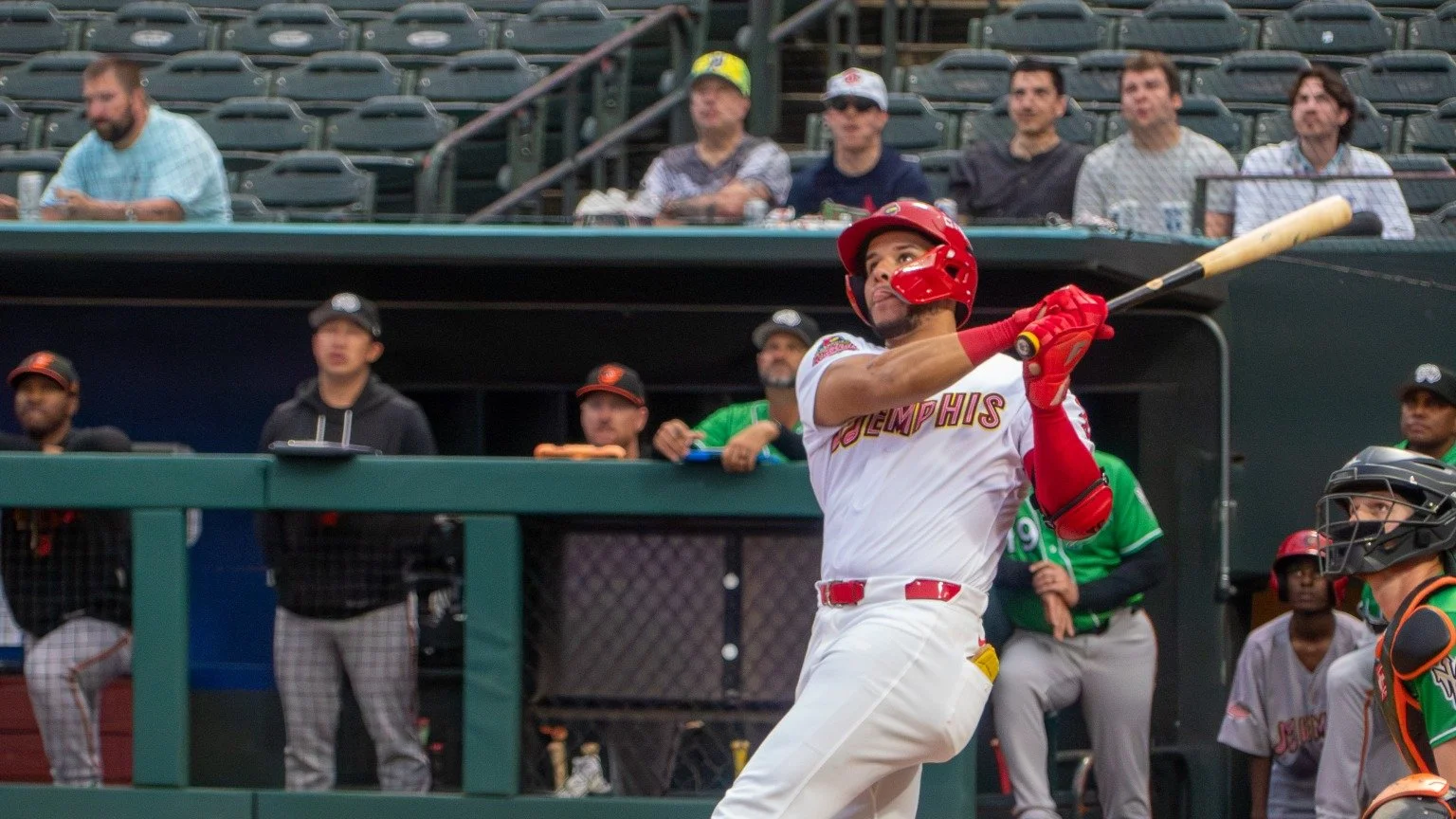
Credit- Memphis Redbirds
The spark for this article came in the past couple of weeks as I watched both Tre Richardson and Joshua Baez go on streaks where it felt like they were hitting the ball out of the yard almost every other at-bat. As I was watching the games, the thought came to my mind that I had felt like the offense in the system had taken a big step up in 2026; nowhere is that more apparent than Peoria, which has rostered 10 players across this season with a 116 or higher WRC+ across 50 at-bats at the level. So I decided to dig into the stats to see if my hypothesis was true and found some really interesting data. For this article, I took every Cardinals minor league player with 100 at-bats this season, as of June 9th, and all qualified players from the years 2022-2025.
Hitting the ball in the air hard
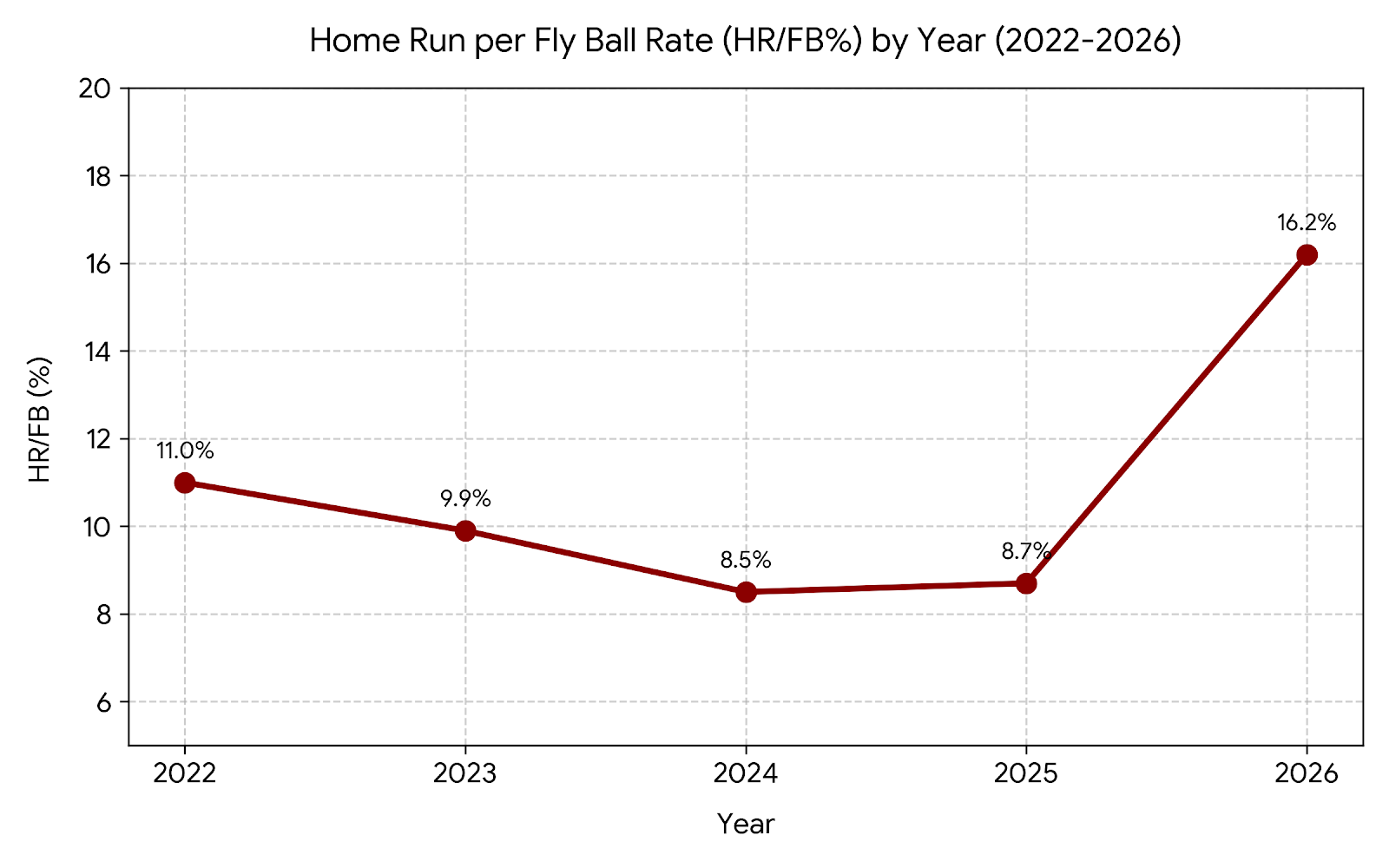
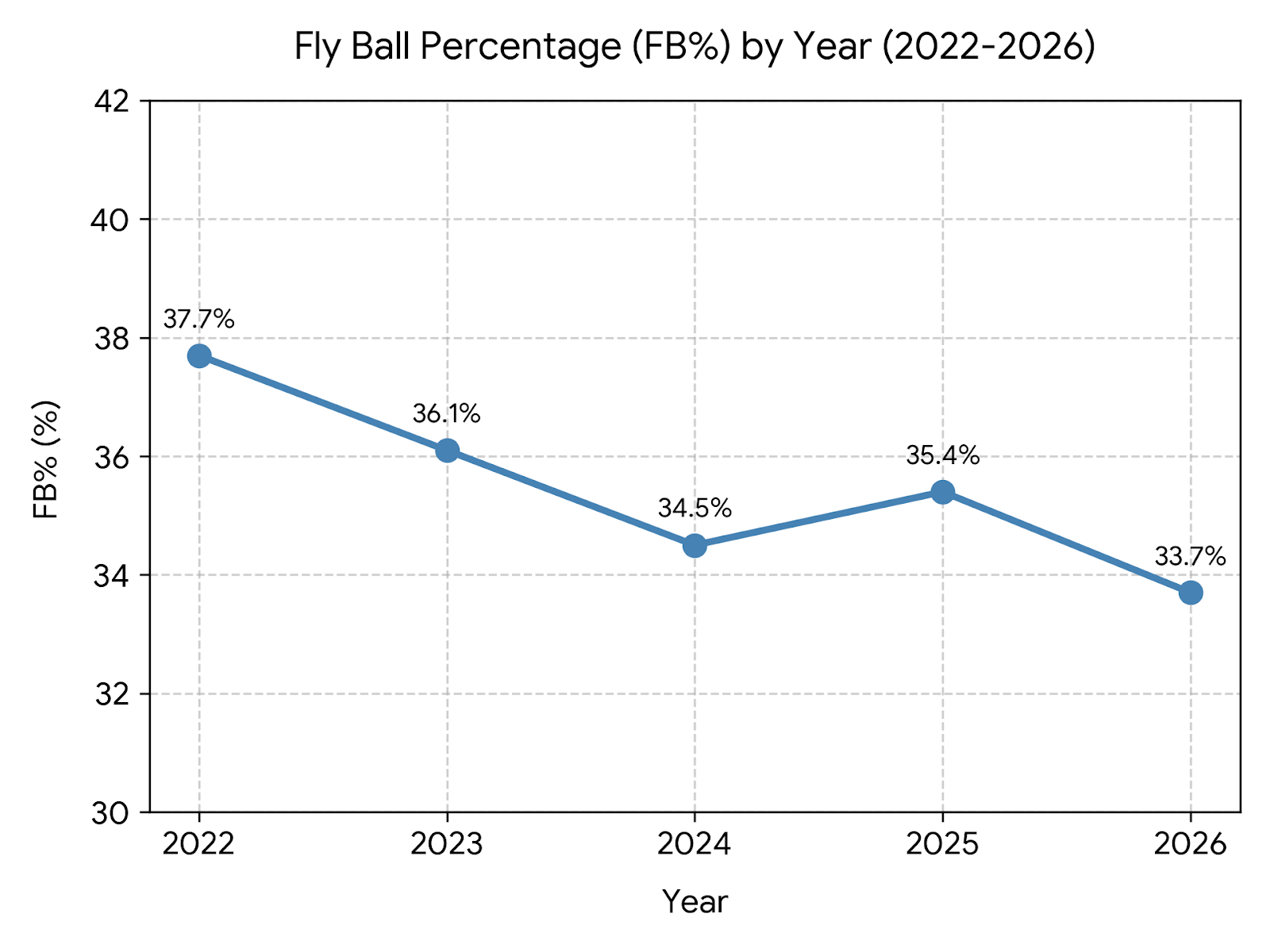
The most eye-popping graph that I created when doing my research was the home run to fly ball percentage graph. The Cardinals have almost doubled their HR/FB% from 2025 and are almost 5% better than the next best season as part of my data. In 2025, the Cardinals’ highest HR/FB% was held by Carlos Linarez at 20.8%; in 2026, the Cardinals have 10 players above that mark, with Won-Bin Cho coming in at #10 with a 22.9% HR/FB%. Overall, the Cardinals have 12 minor league players above the 20% threshold and an impressive 21 over the 15% mark, which is the most since 2021. In the years 2022-2025, the Cardinals’ highest HR/FB% season was Chandler Redmond’s 38.8%. So far in 2026, the Cardinals have 3 players above that mark, with Jimmy Crooks, Tre Richardson, and Jack Gurevitch all holding marks above 40%. While the Cardinals have seen an increase in HR/FB%, they are actually hitting fewer fly balls this season than in years past; this could be just a coincidence, or it could be something that they are actively doing while trying to get to harder-hit balls.
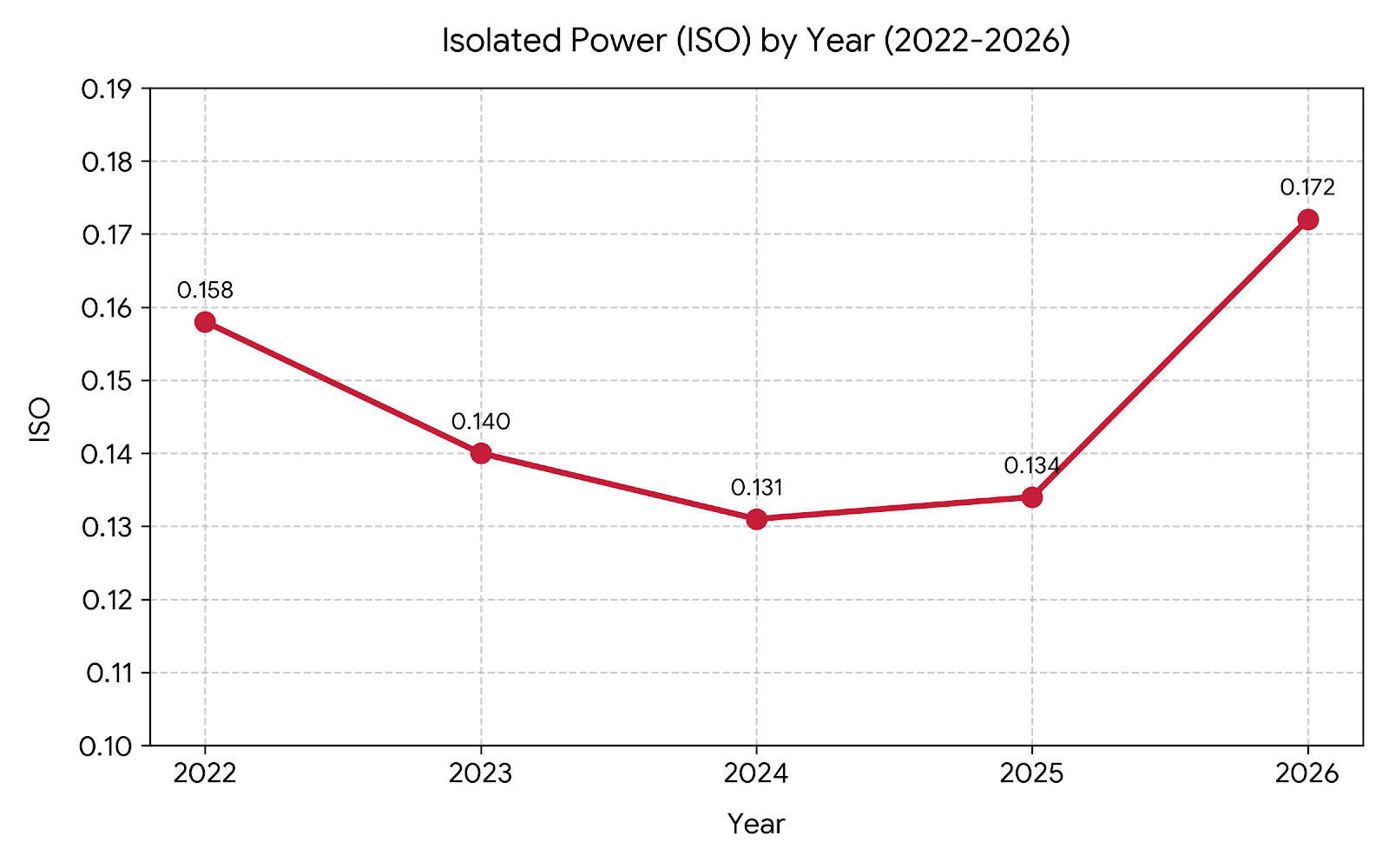
This power increase also shows up in the system’s Isolated Power (ISO), which is calculated by taking slugging percentage and subtracting batting average. The Cardinals have seen a close to 40-point jump since last season, with the Cardinals having 14 minor league players with an ISO over .200, which is the most since they had 15 in 2022. The Cardinals also have 4 players north of the .300 mark, which ties 2022 for the most in that category.
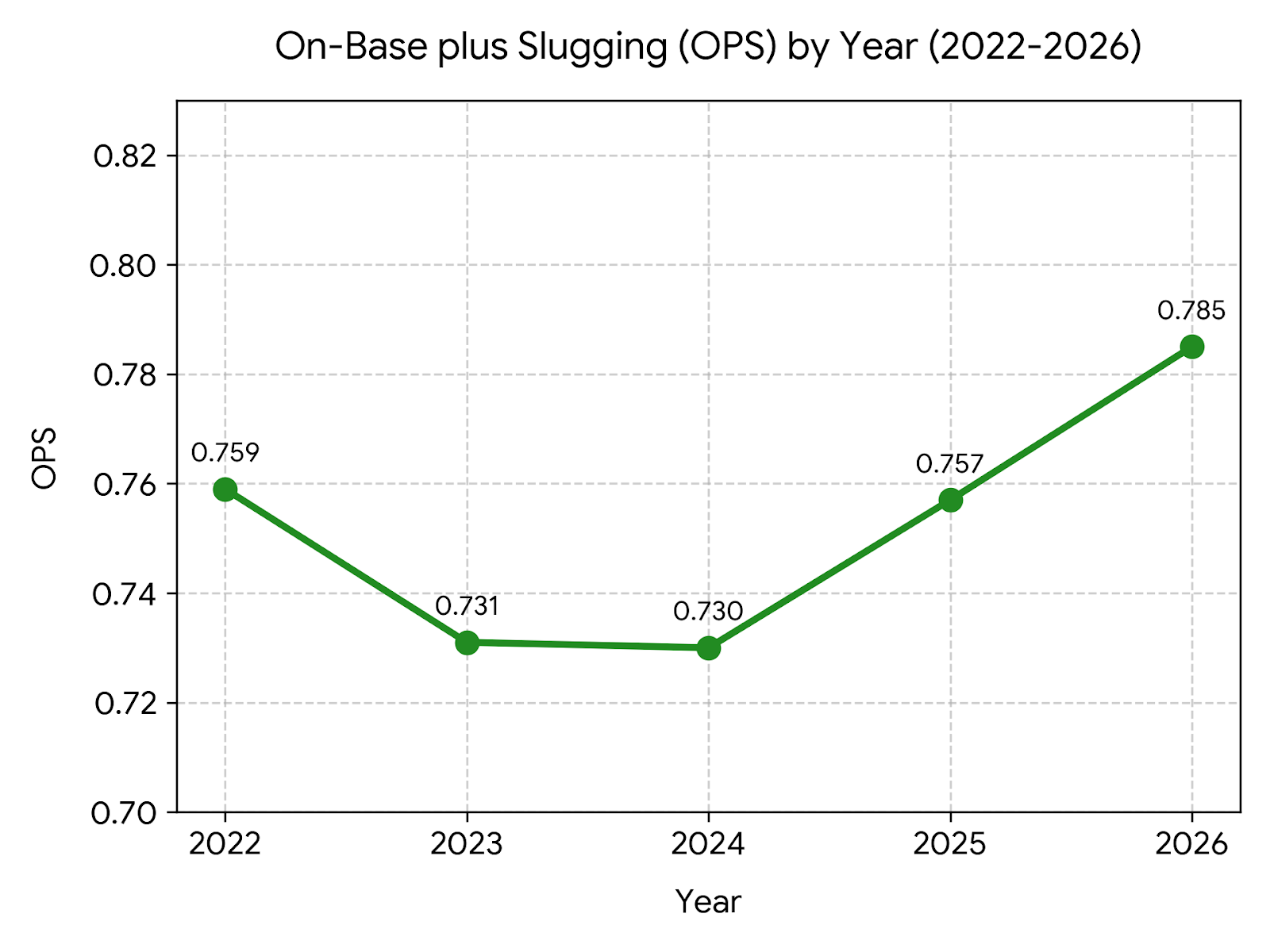
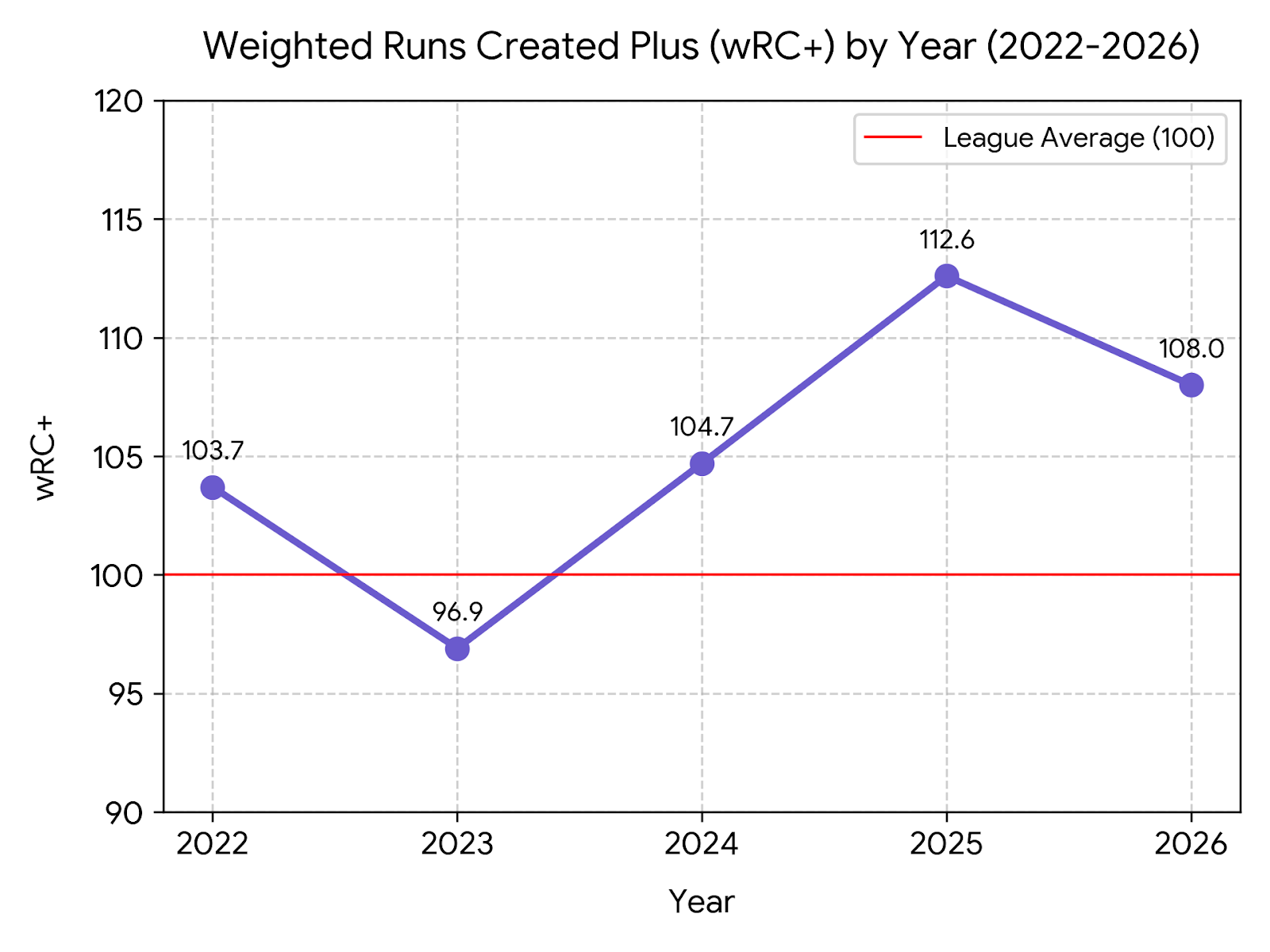
It’s clear the Cardinals farm system is hitting for more power, but is that actually turning into results? That is a more complicated question. Because of this power surge, the Cardinals’ farm system has seen a close to 50-point jump in their average OPS among minor leaguers, which includes 10 above the .900 mark, which is the most of this data set. But they have actually seen their WRC+, which is a stat that normalizes offensive production across leagues, go down by 4 points compared to 2025. This is largely because offense is up throughout the minor leagues by a bit, with the Midwest League runs scored per game being up 25% vs 2025 per Baseball America, and other leagues such as the Texas League seeing increases from 0.8 to 1.1 home runs per game. So while I do think, under the management of Dalton Hurd and his team, the Cardinals have taken a step up offensively, there are definitely some league factors helping them out.
Trade offs?
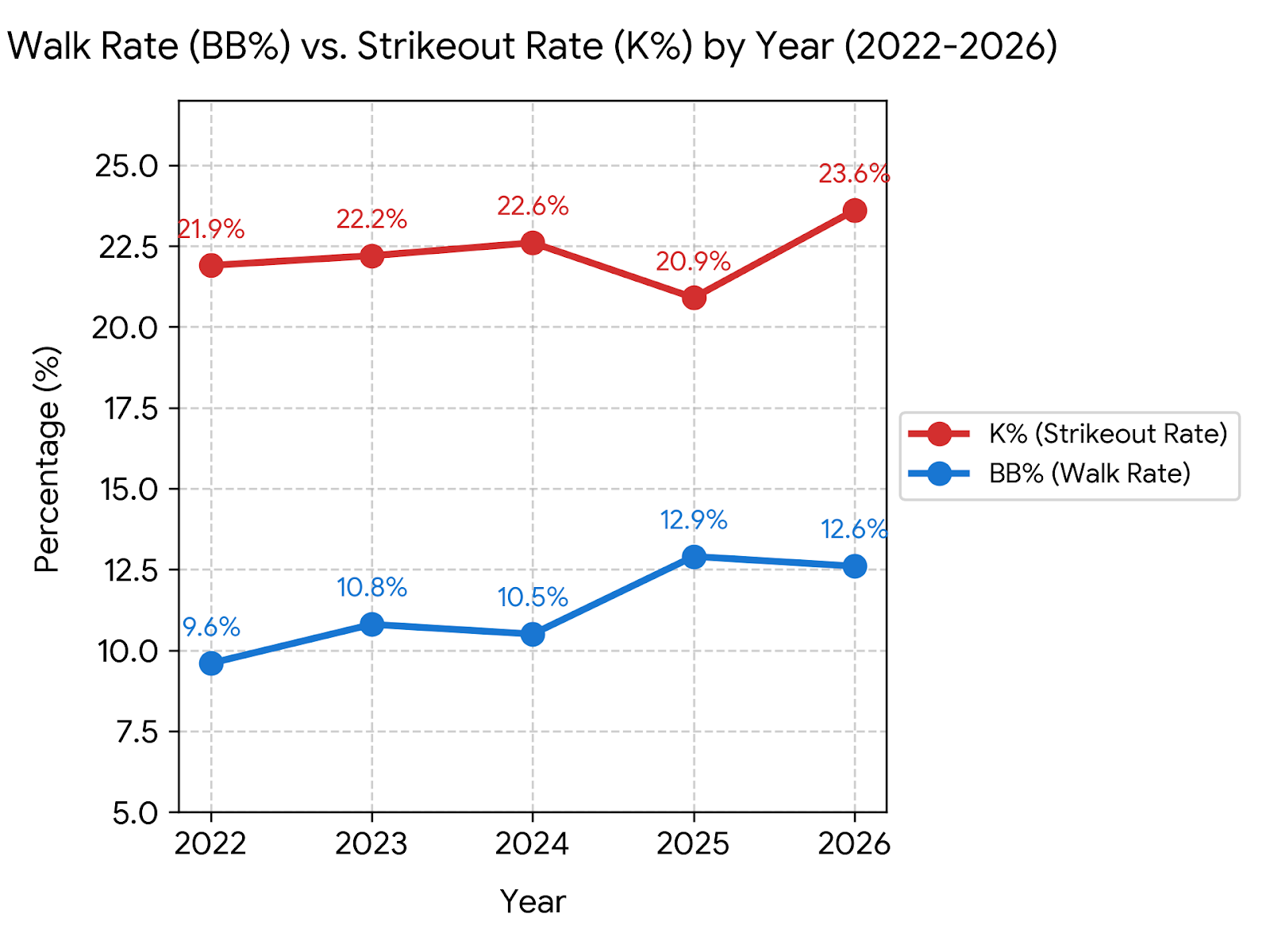
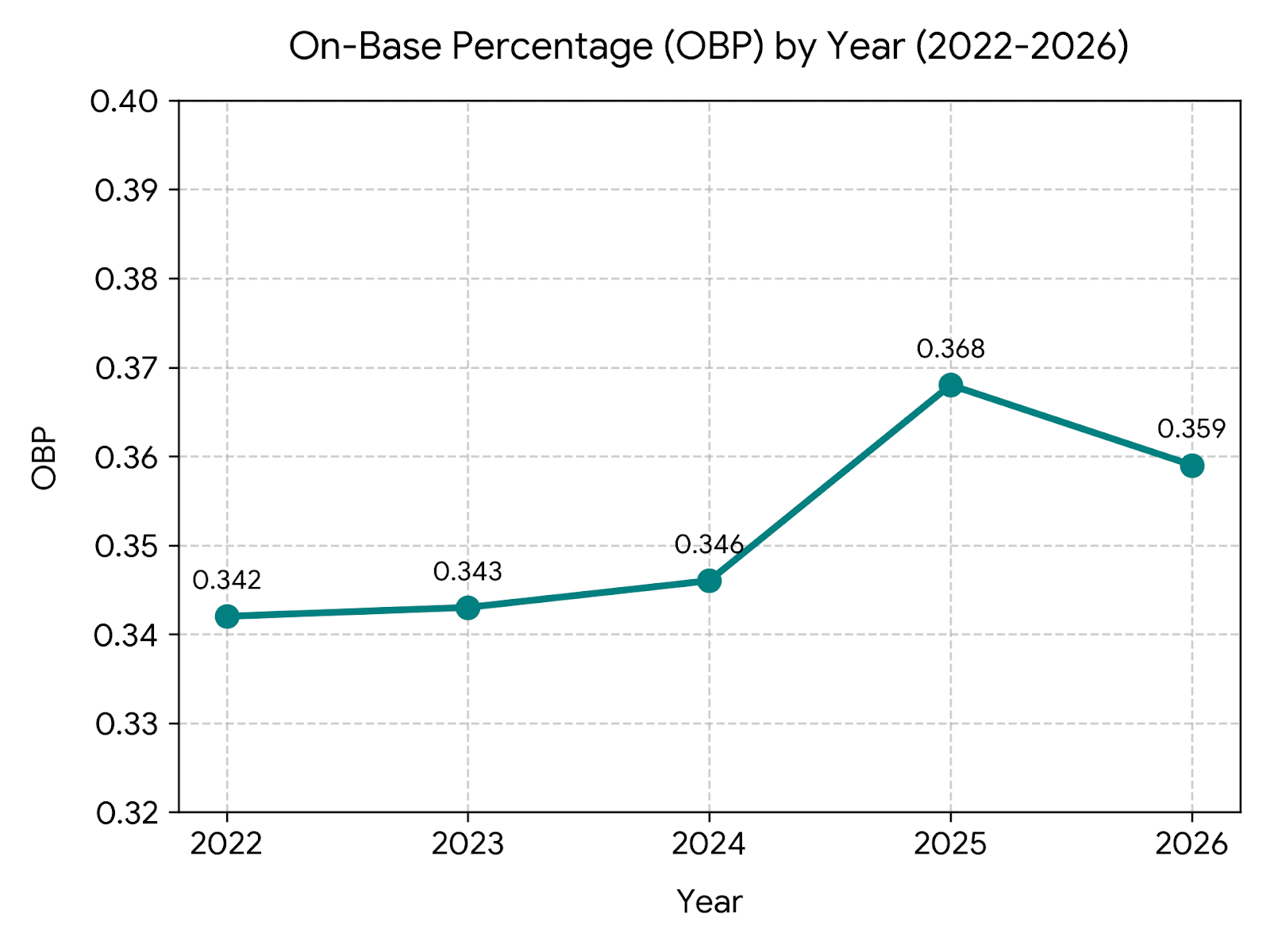
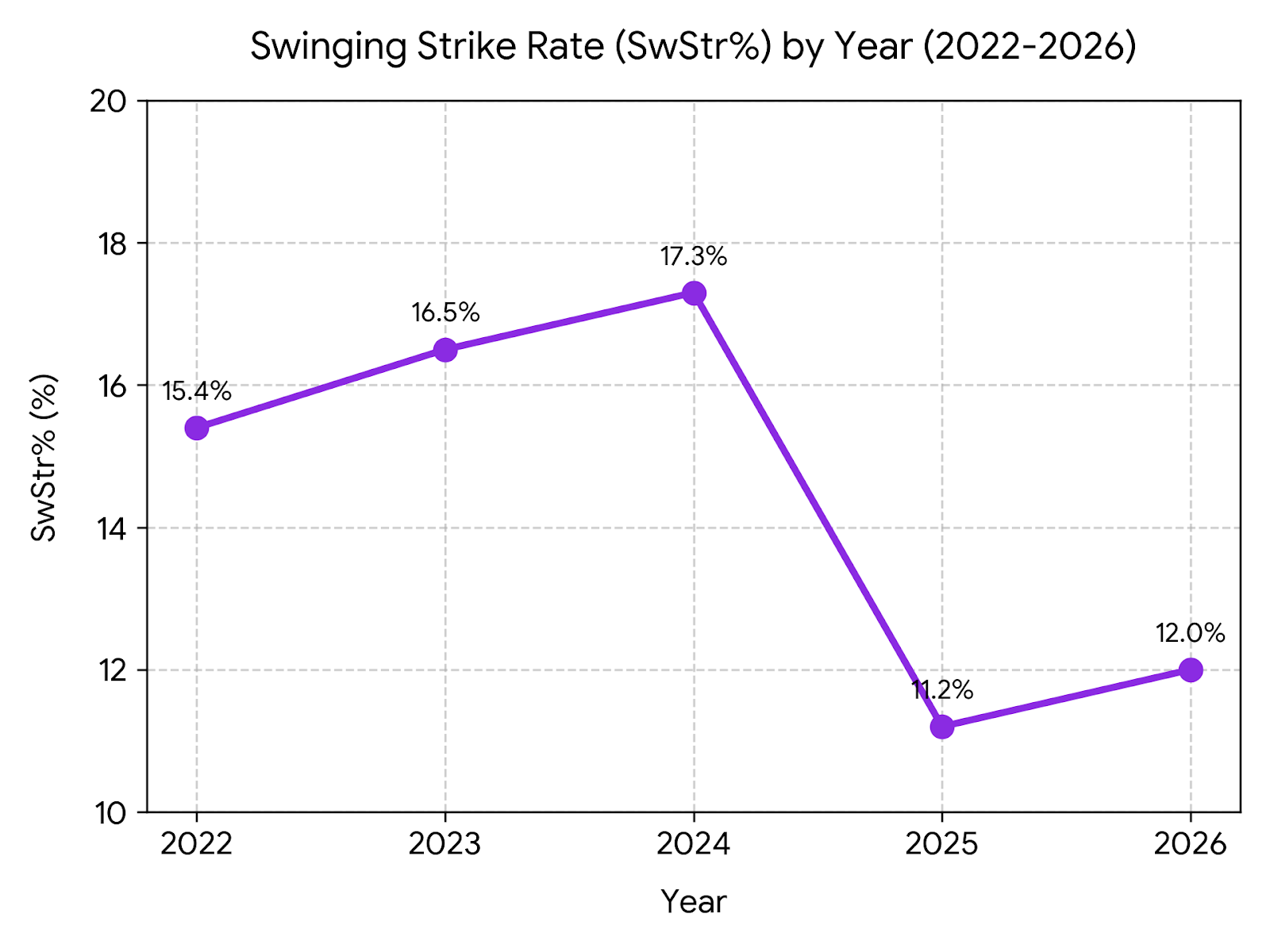
With more power comes some trade-offs, the first and most obvious being that the system has seen a rise in strikeout rate by over 2%, which is the largest year-to-year variation of my data set. Along with this increase in strikeout rate, we have seen a decrease in on-base percentage, though the .359 mark the system currently holds is well above any pre-2025 number. The new development staff under Dalton Hurd has clearly seemed to emphasize getting more power, even if it means striking out a bit more and getting on base slightly less. One interesting note that I picked up while making these graphs is that the Cardinals are still not swinging and missing that much, even with the increase in power, as their swinging strike rate has seen some increase since 2025 but is still well below their 2022-2024 marks, which is a promising sign for the future.
Conclusion
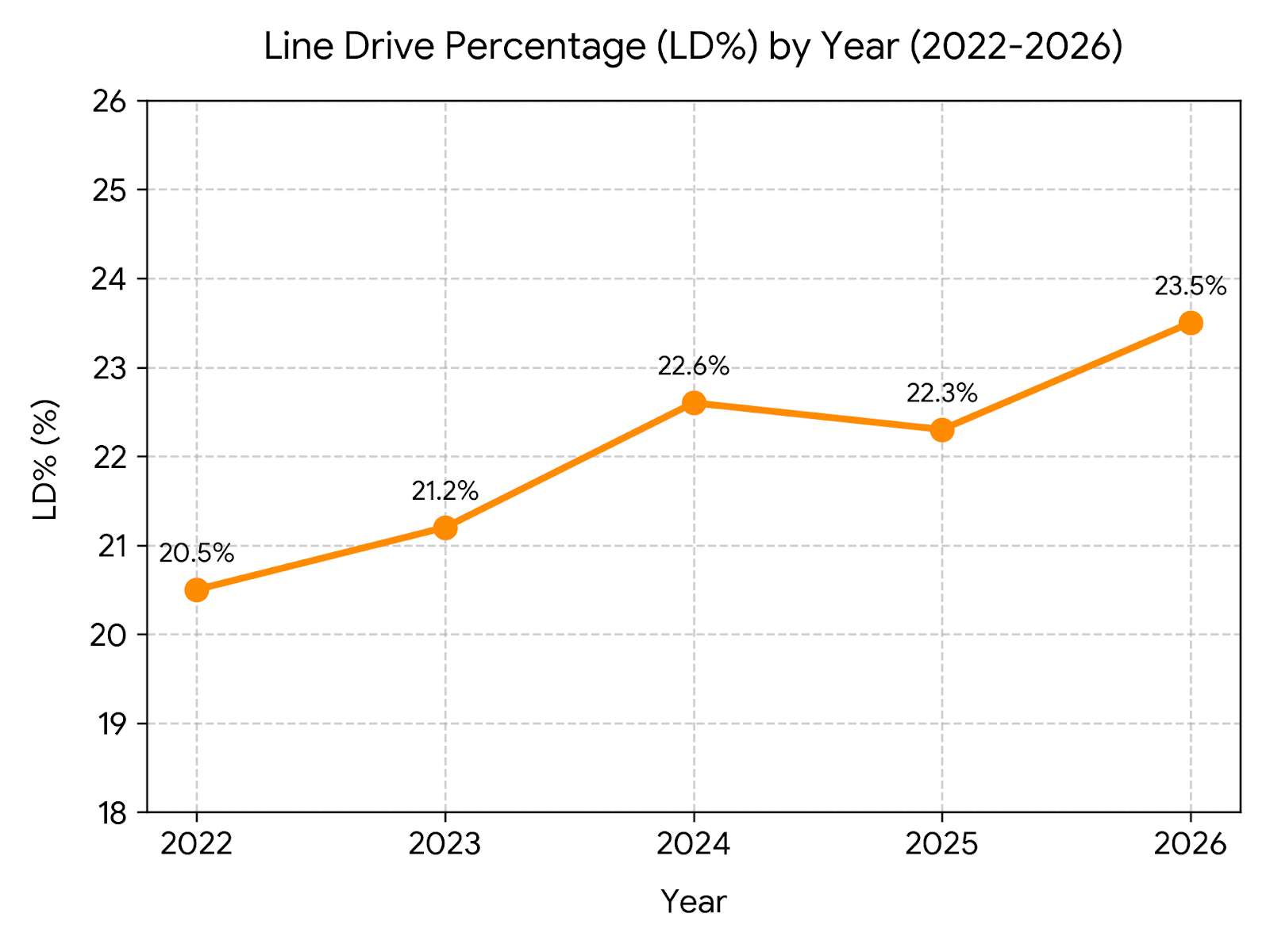
It has been interesting to watch how the Cardinals’ offensive approach as an organization has shifted and molded as a group. While some of the increase in power output can be traced back to offensive improvements throughout all of the minor leagues, it is clear that the new hitting development group has put in some work to get players to more power through the use of more bat speed, combined with the fact that the system is hitting more line drives, the highest xBA of any hit type, than any previous year, which is good for power production. As the new group continues to refine and alter their approach to hitting, it will be interesting to see which of these trends change and which ones stay the same.