2026 Cardinals Draft Recap
Credit: MLB
No team entered the draft with more picks than the Cardinals, who held 23 selections across the two-day event. St. Louis used those picks to assemble a varied class built around up-the-middle prep talent, college bats with diverse skill sets and clear carrying tools, and pitchers with quality fastballs.
The Cardinals ultimately signed 21 of their 23 selections after Texas A&M right-hander Clayton Freshcorn and Oklahoma State outfielder Kollin Ritchie chose to return to school. Even without those two, St. Louis came away with a deep class that added talent across several areas of the farm system. The group has also received high marks around the industry, with ESPN, MLB Pipeline, and OverSlot viewing it as one of the strongest classes in the draft.
OF Trevor Condon (First Round)
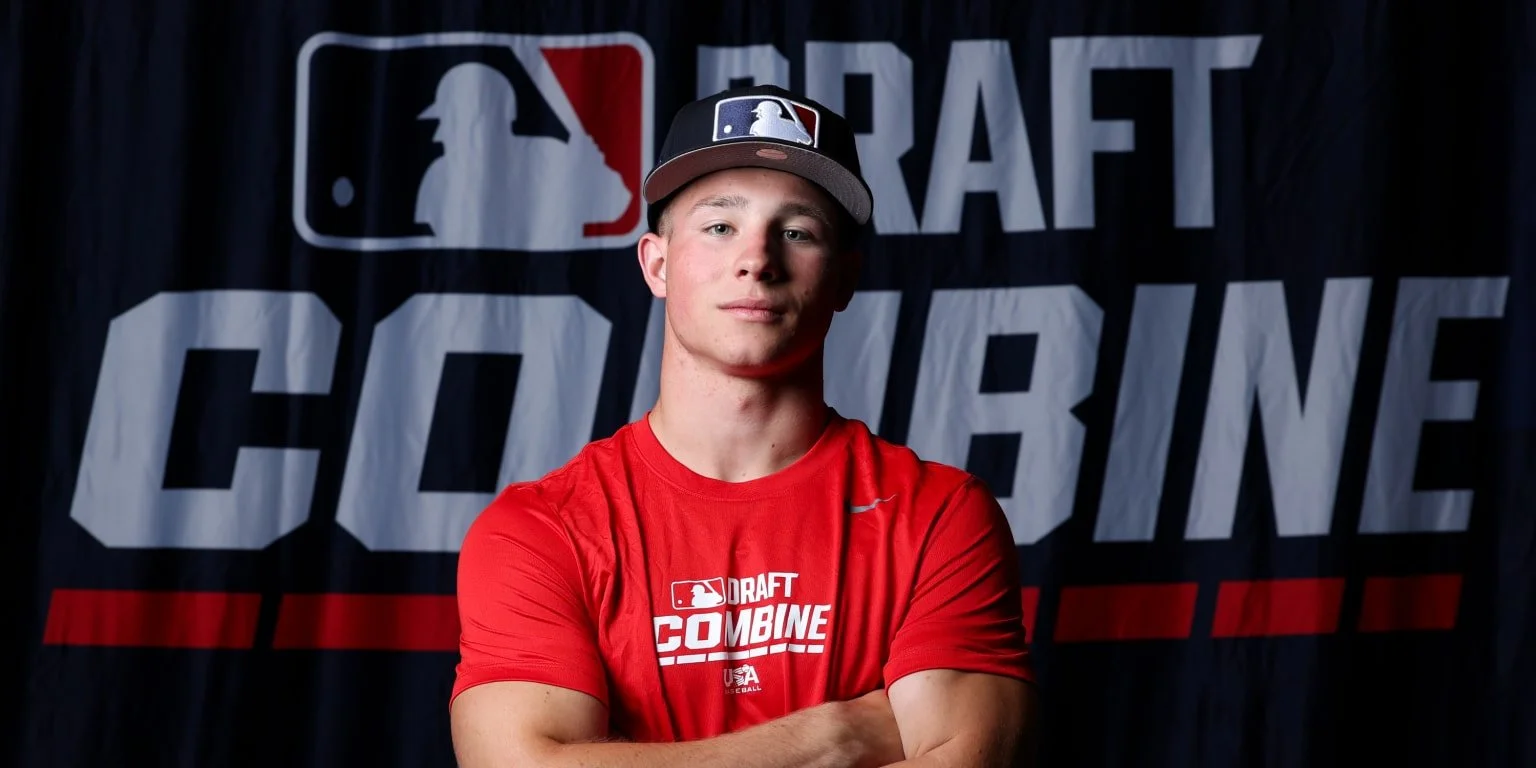
Heading into the draft, there was very little certainty about which direction the Cardinals would go. The general expectation was that they would select a hitter, but as draft day approached, it remained unclear whether that would be a college bat or a high school position player. A few pitchers also entered the conversation late in the process. When the Cardinals were finally on the clock at 13, they selected high school outfielder Trevor Condon out of Etowah High School. Condon put together an outstanding senior season, earning Georgia Gatorade Player of the Year honors in one of the nation's deepest high school classes.
Condon features a start-stop load at the plate. He sits deep into his initial load before pausing as he tracks the pitcher, allowing his hands to work from a higher starting position down to a more comfortable launch position. Once he commits, he utilizes a high leg kick and explodes through the baseball. Condon generates excellent bat speed, and his swing works on a clean, efficient path that allows him to drive the ball consistently.
Condon has the upside to develop into a 3-4 tool player, and it all starts with his hit tool, which entered the draft as his biggest strength. He consistently makes good swing decisions and makes contact at a high rate, making for an attractive offensive profile. The biggest question is how much power he'll ultimately grow into. Condon tapped into more game power during his senior season, hitting nine home runs, and he posted exit velocities of 105-106 mph at the MLB Draft Combine. It's worth noting, however, that his exit velocities from his final round of batting practice were not made publicly available, leaving some additional projection on the table. With his notable bat speed, there's reason to believe Condon can continue adding power as he matures. If he's able to translate more of that bat speed into consistent game power, he has the offensive upside to become a well-rounded impact hitter.
Defensively, Condon offers a relatively high floor for a high school prospect. He possesses plus-plus speed that impacts the game both on the bases and in center field, where he projects to remain long-term. He takes efficient routes, covers plenty of ground, and consistently tracks down balls in the gaps. He pairs that range with a solid arm that is more than adequate for the position, giving him the tools to be an above-average defensive center fielder.
While it's always risky to select a high school player, especially in the first round, there's no denying the upside Condon brings. Betting on prep talent comes with plenty of uncertainty, but the Cardinals are in a position to take that gamble. With one of the deepest farm systems they've had in years, the organization has the prospect depth to invest in a high-ceiling player like Condon and give him the time needed to reach his full potential.
Signing Bonus: $5,161,300 ($5,661,300)
RHP Tegan Kuhns (Competitive Balance Round A)
After selecting two Tennessee pitchers with quality fastballs in last year’s draft, the Cardinals went back to that well and added another in Tegan Kuhns. St. Louis has placed a clear emphasis in recent drafts on targeting pitchers with strong fastball characteristics, and Kuhns fits that mold. His heater is one of the better fastballs in the class and gives the organization a premium offering around which it can build the rest of his arsenal.
Kuhns’ fastball averages 94.2 mph and generates 19.3 inches of induced vertical break from a low 5.5-foot release height. That combination creates a flat -4.3-degree vertical approach angle, which ranks in the 98th percentile and allows the pitch to play particularly well at the top of the zone. The velocity is solid on its own, but the release characteristics and movement profile help the fastball play above its raw radar-gun reading and make it difficult for hitters to get on plane.
The rest of Kuhns’ arsenal is still developing, led by a 77 mph curveball that has significant velocity separation from the fastball. He also mixes in an 83 mph gyro slider and a low-80s changeup, though neither pitch is as advanced as the heater or curveball at this stage. Kuhns does have solid spin capacity, giving the Cardinals reason to believe his secondary mix can improve. The biggest key to unlocking those offerings will be adding more velocity, particularly to the gyro slider. By selecting him, the organization must believe the raw ingredients are there for the secondaries to evolve with professional instruction.
Kuhns also showed encouraging strike-throwing ability, posting a walk rate of just 4.7% this year. His future role will likely depend on how much progress he makes with the secondary arsenal, but the fastball and control already give him a potential path to a back-end starting role. If the Cardinals can help him develop solid enough breaking pitches to complement the heater, Kuhns has a chance to become a dependable mid-rotation major-league starter.
Signing Bonus: $3,044,600 ($3,044,600)
SS Rocco Maniscalco (Second Round)
Most people around the Cardinals community expected the organization to target a couple of high school players on Day 1. Still, few anticipated the club selecting two prep prospects with its first three picks. With the 50th overall pick, the Cardinals selected infielder Rocco Maniscalco, the youngest player in the 2026 draft at just 17 years, 2 months old – and the youngest player to ever be drafted. Originally a member of the 2027 class, Maniscalco reclassified into the 2026 class, making him eligible for this year's draft a full year early.
Maniscalco is a switch-hitter who features a quiet setup and a small, controlled leg kick from both sides of the plate. From the right side, his swing is flatter and geared more toward line drives than loft. From the left side, however, the swing looks more natural and fluid. He creates more uphill plane from that side, allowing him to lift the ball more consistently and tap into greater power potential.
Defense is what separates Maniscalco from the rest of the class. He has all the traits teams look for in a long-term shortstop: quick first-step reactions, impressive range, advanced footwork, soft hands, efficient transfers, a clean arm path, and plus arm strength. He showcased that arm at the MLB Draft Combine, where he was clocked at 97 mph across the diamond. His defensive instincts and athleticism give him a legitimate chance to become one of the premier defensive shortstops in professional baseball, providing an exceptionally high floor even as his bat continues to develop.
While Maniscalco's defensive ability is already well established, there's still plenty of development ahead on the offensive side. Both his hit tool and game power entered the draft as question marks, though he flashed intriguing raw power at the MLB Draft Combine by posting exit velocities up to 108 mph. Some evaluators believe his hit tool can develop into an average – or even above average – tool over time, and his youth is a major reason for that optimism. Having just turned 17, Maniscalco has plenty of physical and offensive projection remaining, but he'll need to make meaningful strides at the plate to maximize his overall ceiling.
Maniscalco represents a bet on long-term upside rather than immediate polish. His defensive ability gives him one of the highest floors in the high school class, and if that bat develops the way the Cardinals believe it can, they may have landed their shortstop of the future. It’s a selection that requires patience, but the potential payoff could make it one of the biggest steals of the 2026 draft.
Signing Bonus: $3,200,000 ($1,980,000)