
Analyzing the Cardinals Rule 5 Draft Additions & Subtractions
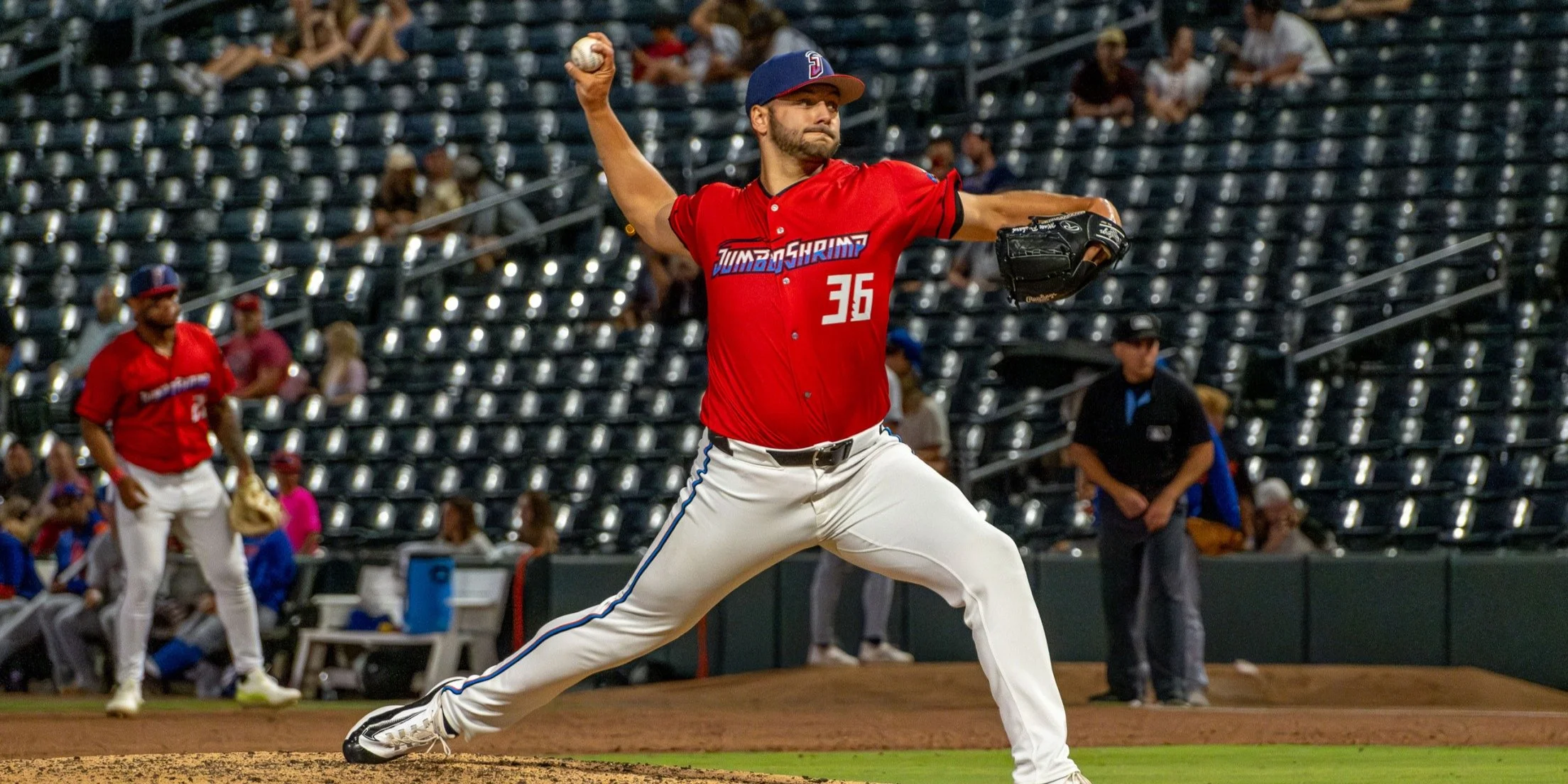
Credit: Wyatt Lucovsky/Jacksonville Jumbo Shrimp
The Cardinals acquired two pitchers in this year’s Rule 5 Draft, including one selection in the Major League phase. They also lost a talented arm to the Yankees who had been largely overlooked heading into the draft. In this article, I will recap each of the Cardinals’ additions and subtractions from the Rule 5 Draft.
Additions
RHP Matt Pushard
Pushard was someone I considered writing about in my Rule 5 targets article but ultimately did not include. That said, it comes as no surprise that a pitcher with his track record of success at the upper minor-league levels was selected, and I think there is a strong chance he sticks on the Cardinals’ roster for the duration of the 2026 season.
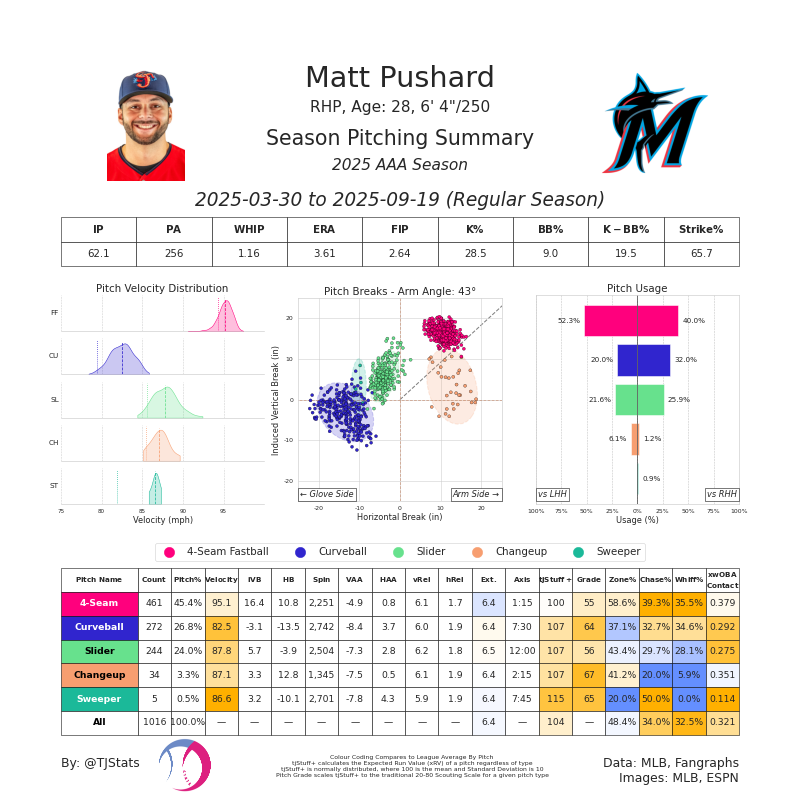
Across four seasons in the Marlins’ minor-league system, Pushard posted a 3.21 ERA while striking out 199 batters over 174 innings. In 2025, he spent the entire season at Triple-A and turned in an excellent campaign, recording a 3.61 ERA in 62.1 innings with 73 strikeouts against just 23 walks.
Pushard’s best offering is his four-seam fastball, which averages 95 mph with 16.4 inches of induced vertical break from a 6.1-foot vertical release height. While the raw pitch characteristics may not immediately stand out, the fastball performed at an exceptional level at Triple-A in 2025. He generated an elite 35.5% whiff rate while also excelling at inducing chase, posting a 39.3% chase rate. Although there are questions about how well the pitch will translate against major-league competition, I’m optimistic it will continue to play above its raw profile.
Interestingly, Pushard’s secondary offerings grade better from a pure stuff perspective than his fastball, despite not producing the same level of statistical success. His most frequently used secondary is a tagged curveball that at times behaves more like a sweeper and at other times resembles a traditional curveball, particularly against left-handed hitters. He shows elite feel for spin, averaging 2,742 RPM on the pitch.
He also features an 88 mph cutter/slider hybrid with decent results, along with a sparingly used changeup deployed exclusively against left-handed hitters. The changeup has flashed an intriguing shape, though it has lacked consistent feel and swing-and-miss results when used, albeit in a very small sample.
Overall, I’m very interested to see how Pushard’s pitch mix translates at the major-league level.
RHP Ryan Murphy
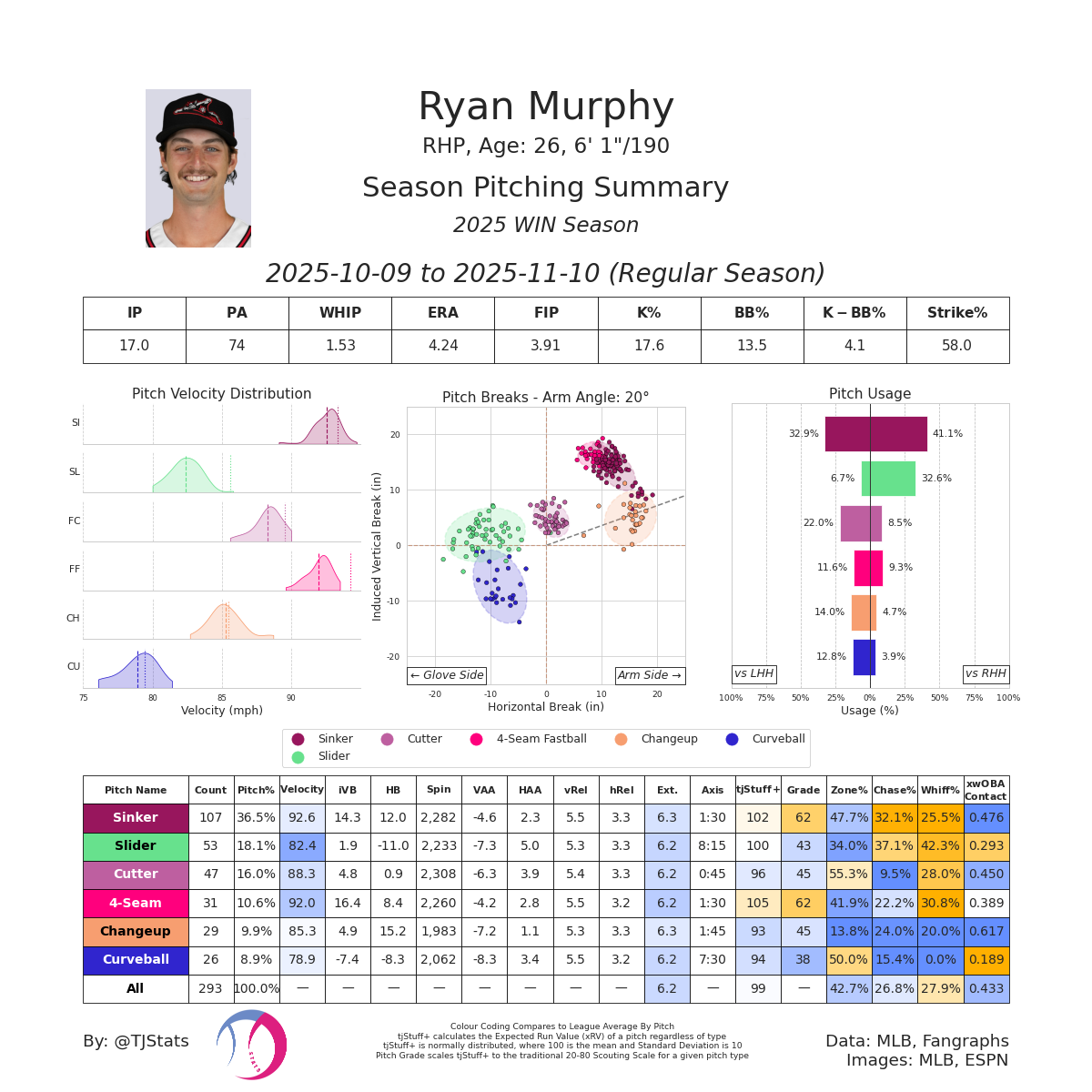
Murphy was a former fifth-round pick by the Giants in the 2020 draft. He missed most of the 2025 season while recovering from Tommy John surgery, pitching just 19.1 innings during the year. The Giants sent him to the Arizona Fall League, where he logged an additional 17 innings and posted a 4.29 ERA.
Murphy’s stuff in the AFL was decent but not overwhelming, headlined by a 92-93 mph fastball from a 5.5-foot release height that produces a relatively flat approach angle (-4.6 VAA). He flashes a variety of pitch shapes, though none stand out as true plus offerings at this point, including a baby sweeper, a cutter, a changeup, and a curveball. Overall, it’s a starter’s mix.
I view Murphy primarily as organizational depth arm, with some upside if the Cardinals are able to squeeze a bit more out of him — especially if he sees a velocity bump now that he’s further removed from Tommy John surgery. It’s notable that the Giants thought highly enough of him to send him to the AFL, yet opted not to add him to their Triple-A roster.
While I don’t have significant expectations for Murphy beyond being a depth arm, I do find him more intriguing than the typical minor-league Rule 5 pick.
Subtractions
RHP Cade Winquest
The Yankees selected Cade Winquest from the Cardinals. Winquest turned in an impressive season, throwing 106 innings with a 3.99 ERA. He finished the year particularly strong, posting a 3.19 ERA over his final 42.1 innings while walking just 12 batters and striking out 42.
Winquest made significant strides with his strike-throwing in 2025, cutting his walk rate to just 8.5%. He features a mid-90s fastball with a cut-ride profile from a low 5.5-foot release point thanks to the plus extension he generates. While the fastball may not have the best shape, Winquest shows excellent feel for generating spin on the offering. The pitch has touched triple digits at times, and will certainly play up in the bullpen.
His best-performing secondary is an upper-70s curveball, which he complements with a mid-80s slider, firm splitter, and a cutter. Overall, Winquest brings a diverse pitch mix with strong spin capacity, a fastball that lives in the mid-90s, and notable improvements in his strike-throwing ability in 2025.
I think there’s a reasonable chance Winquest sticks, though the margin is thinner with a club like the Yankees, who may not be able to afford a roster spot for a pitcher who might not be fully ready to contribute at the major-league level.
RHP Sean Harney, 1B Matt Lloyd, RHP Zane Mills
The Cardinals also lost three prospects in the minor-league portion of the Rule 5 Draft. None of the players had been added to the Cardinals’ Triple-A roster, leaving them exposed to selection by other organizations.
One of those players was right-handed pitcher Sean Harney, who was selected by the Diamondbacks. Harney spent just one season in the Cardinals organization, posting a 4.24 ERA over 34 innings out of Double-A Springfield’s bullpen. Originally drafted by the Rays in the eighth round of the 2022 draft, Harney spent his first two professional seasons in Tampa Bay’s system before being traded to the Mets and later acquired by St. Louis. He operates with a low-90s fastball that features two-plane movement and a relatively flat approach angle. Harney also mixes in a cutter, a low-80s gyro slider, and a changeup.
The Cardinals also lost first baseman Matt Lloyd to the Red Sox. Lloyd spent the past two seasons in the Cardinals organization after beginning his professional career with the Reds. He has consistently shown power potential at each stop, despite early-career bat-to-ball concerns that he has improved upon since joining the Cardinals system. Defensively, Lloyd has shown some versatility, logging time in the outfield and at third base, but his best defensive fit is clearly at first base, which ultimately limits the profile.
Zane Mills was the lone former Cardinals draft pick selected in the minor-league phase, going to the Cubs. The Cardinals selected Mills in the fourth round of the 2021 draft out of Washington State. He began his career as a starter before transitioning into a multi-inning relief role over the past two seasons, where he has found more success. Mills’ stuff does not stand out, as he sits in the low 90s with a dead zone fastball shape from a standard release point. He also features a cutter, a baby sweeper, and a changeup, though none of the secondaries grade as impact offerings.
